Explore 5 Trends Shaping the Future of UAV Technology
According to a recent analysis published on Bao Moi (a popular online newspaper in Vietnam), the world is now entering the era of UAV 2.0. This is a transformative phase where drones evolve from manually piloted devices into an intelligent, interconnected network. Furthermore, in this era, humans shift from being direct pilots to becoming supervisors and data analysts overseeing fleets of self-governing aerial systems.
Below are the five major trends expected to define the future of the global UAV industry:
1. From “remote control” to “full autonomy”
By 2030, UAVs are expected to achieve fully autonomous flight, redefining how operations are conducted across industries. This transition is driven by advanced AI, real-time navigation, and increasingly powerful onboard computing systems.
Future autonomous UAVs will be capable of:
- Planning and prioritizing flight routes independently.
- Detecting and handling in-flight anomalies without human intervention.
- Completing complex missions end-to-end while operators simply supervise.
Human involvement will shift from manual piloting to monitoring mission performance and interpreting the data UAVs send back.
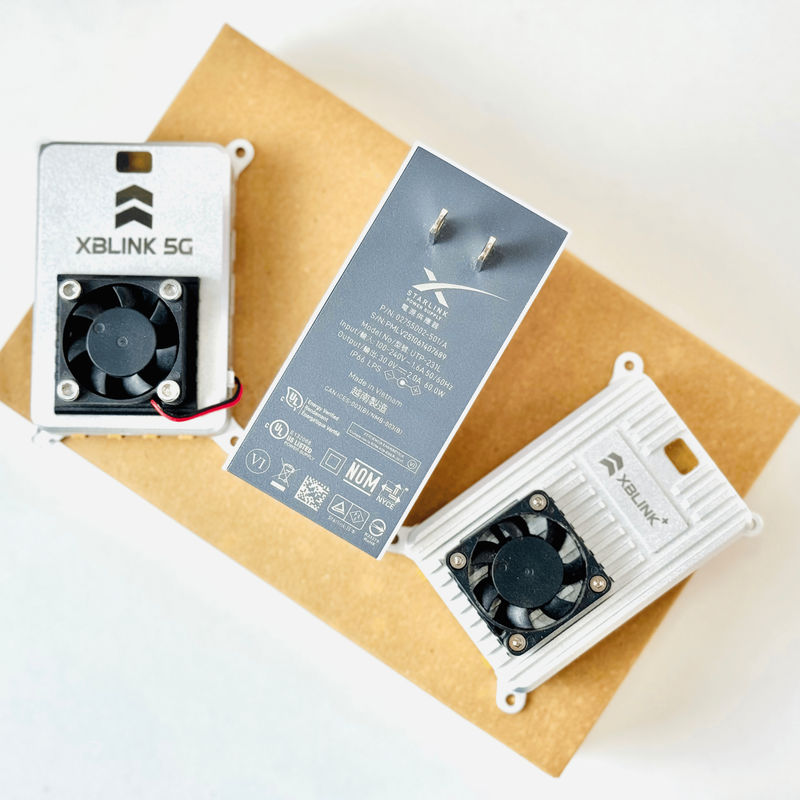
For example, XBLink SAT, a product from XBStation, allows UAVs to fly Beyond Visual Line of Sight (BVLOS) while transmitting real-time images, video, and mission data. Even the UAVs are in areas with weak or nonexistent mobile coverage.
2. Drone swarm: The power of collective intelligence
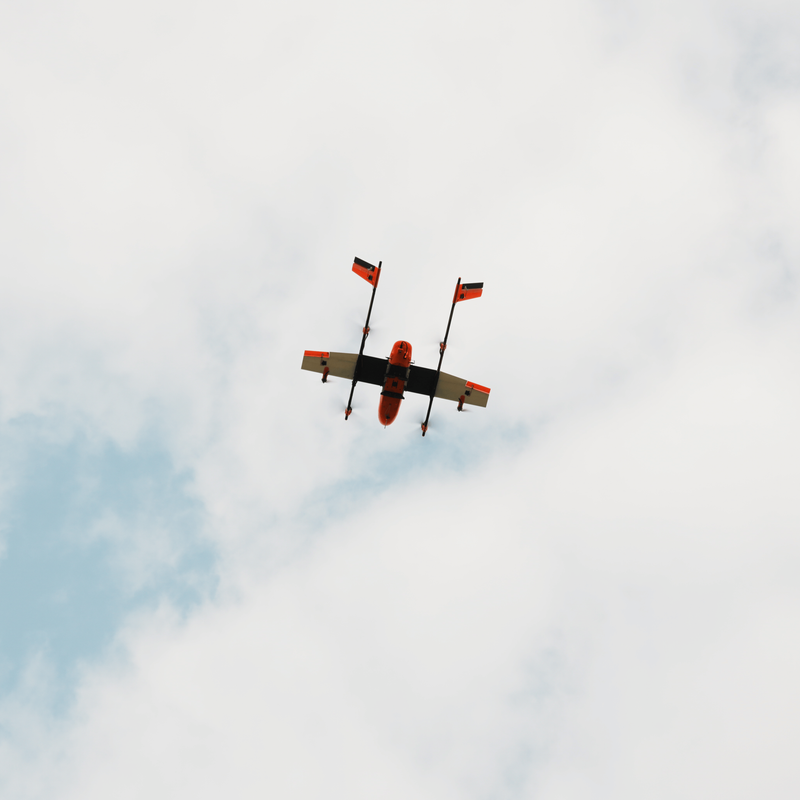
One of the most significant shifts underway is the move toward swarm operations, where dozens or hundreds of drones coordinate like a single intelligent organism. Inspired by natural swarm behavior, this model dramatically increases efficiency, coverage, and scalability.
Swarm UAVs can:
- Distribute tasks autonomously based on real-time conditions.
- Maintain formation and avoid collisions using built-in algorithms.
- Expand operational coverage exponentially compared to single-drone missions.
2.1. Real-world applications of drone swarms
Agriculture
Instead of relying on traditional large aircraft for crop spraying, swarms of small drones can:
- Cover fields faster and more evenly.
- Reduce chemical waste through precise targeting.
- Minimize risk and system downtime.
Search & rescue (SAR)
In emergencies or hazardous environments:
- A UAV swarm can scan vast areas within minutes.
- Multi-angle cameras provide comprehensive situational awareness.
- The likelihood of detecting missing persons increases significantly.
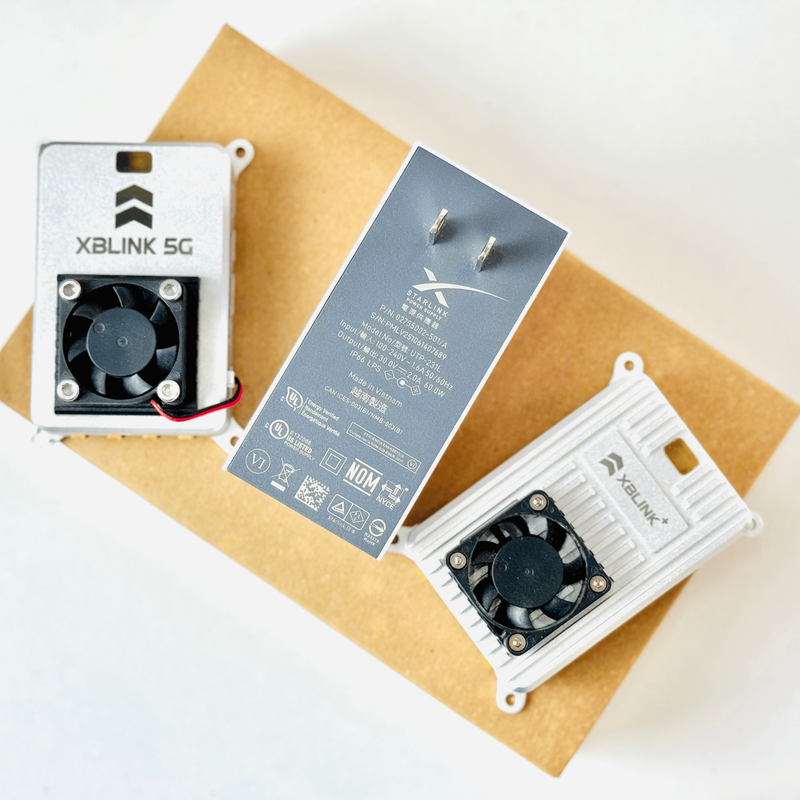
With stable data transmission tools like XBLink, each drone in the swarm can communicate reliably, making large-scale coordinated operations both practical and safe.
3. Conquering the stratosphere: the new frontier at 20 km
As low-Earth orbit becomes increasingly crowded, the stratosphere, roughly 20 km above the Earth's surface, is emerging as a strategic operating zone for long-endurance aerial platforms (HAPS).
For example, the Airbus Zephyr set a groundbreaking record by flying 67 consecutive days in the stratosphere. SoftBank (Japan) successfully tested 5G transmission from a stratospheric HAPS platform to ordinary mobile phones on the ground.
These breakthroughs position high-altitude UAVs as potential alternatives to satellites, capable of supporting communications, surveillance, environmental monitoring, and disaster response.
4. Energy breakthroughs: The deciding factor for UAV advancement
Energy capacity has long been the main limitation of UAV technology. Traditional lithium batteries restrict most drones to flights of around 20-30 minutes. However, new energy innovations are reshaping what drones can achieve.
Hydrogen fuel cells: extending flight time 10x
Hydrogen fuel cell technology allows drones to:
- Increase flight time from 30 minutes to 3-5 hours.
- Lower weight compared to traditional batteries.
- Refuel quickly for continued operation.
This advancement opens new possibilities for applications requiring long endurance, including logistics, border patrol, large-scale agriculture, and environmental surveillance.
High-efficiency thin-film solar power
When combined with advanced energy storage systems, thin-film solar cells enable UAVs, especially those operating in the stratosphere:
- Stay airborne continuously for months without landing.
- Harvest solar energy throughout the day with minimal weight increase.
This technology supports missions such as climate research, persistent aerial coverage, and remote connectivity.
Read more:
Explore practical use cases of XBLink SAT for enterprises
XBStation welcomes representatives from a technology company
Vietnam’s 2025 low-altitude economy forum and the $10 billion industry
5. UTM: The critical infrastructure for the UAV industry
As UAV operations scale to thousands of aircraft across cities, farmlands, borders, and industrial zones, the need for an organized traffic management system becomes essential. This is where Unmanned Traffic Management (UTM) comes in.
UTM systems are designed to:
- Automatically grant and regulate flight permissions.
- Coordinate airspace usage among large UAV fleets.
- Monitor flight activity in real time.
- Prevent potential collisions between drones or with manned aircraft.
- Ensure UAVs comply with restricted or sensitive airspace zones.
In essence, UTM is the air traffic control system of the UAV world. It will determine the long-term safety and scalability of the industry.
The rise of UAV 2.0 is no longer a distant vision but an ongoing transformation, driven by full autonomy, swarm intelligence, stratospheric operations, next-generation energy systems, and advanced UTM infrastructure. As these trends rapidly evolve, solutions like XBStation and XBLink are becoming essential in enabling stable connectivity, safe BVLOS operations, and intelligent fleet management. Together, these technologies are shaping a future where UAVs integrate seamlessly into daily life and industrial ecosystems, delivering greater efficiency, broader coverage, and unprecedented operational capabilities.